
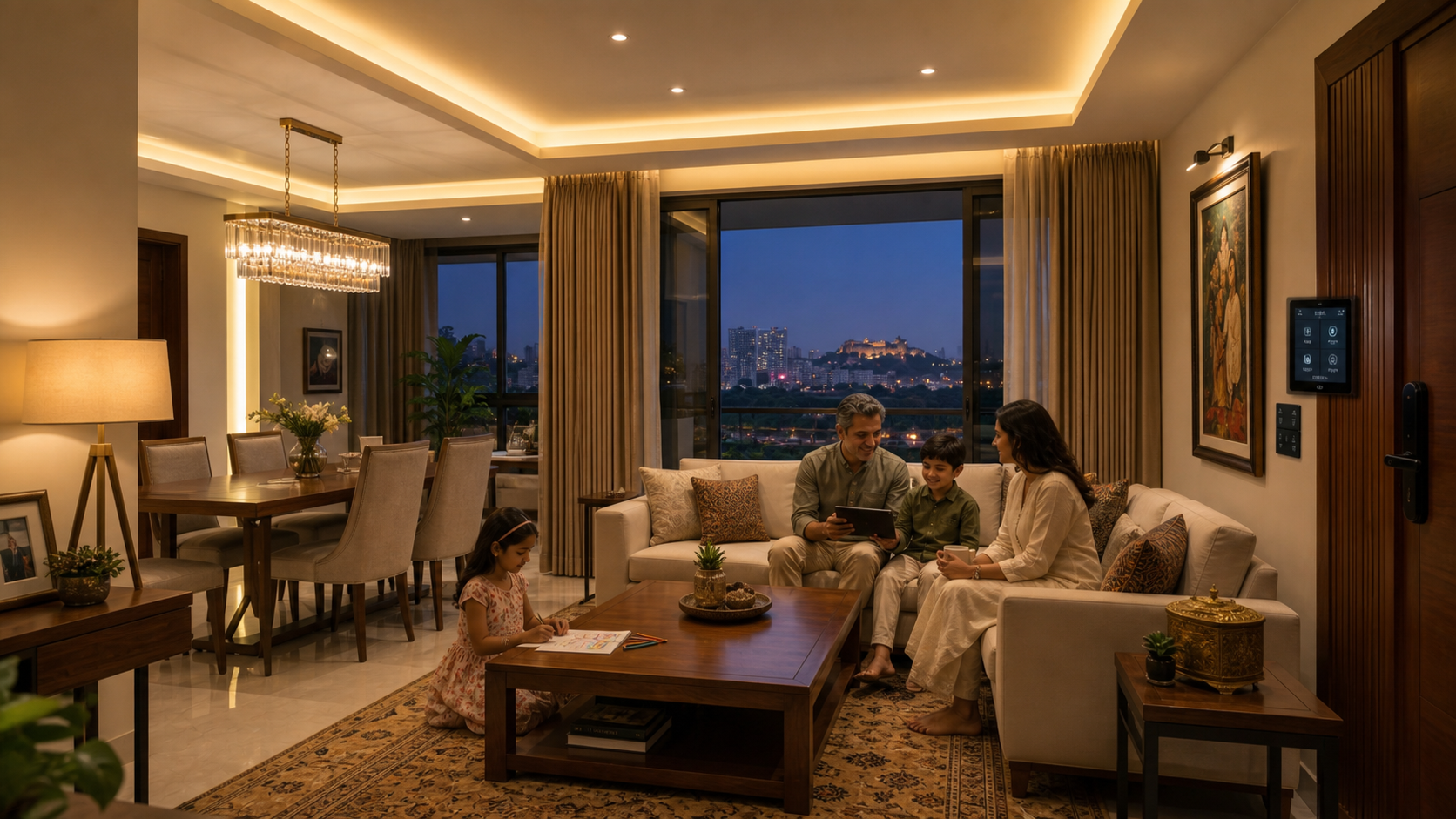
When families explore home automation, they usually do not want technology for its own sake. They want better mornings, calmer evenings, fewer repeated actions, and a home that responds more naturally to daily routines.
If you want the full system view first, read the main home automation guide.
Morning and evening routines become easier
One-touch scenes can reduce small repeated decisions throughout the day. Instead of managing lights, curtains, and comfort separately, the home can shift with a single action:
- Morning scenes that open curtains and brighten key spaces
- Evening scenes that warm the lighting and settle common areas
- Night scenes that simplify the transition to rest
Shared spaces feel more organized
Living rooms, dining areas, and family spaces benefit when the room can change purpose quickly without many manual adjustments. That is especially useful in homes where the same room serves multiple functions across the day.
Read Best Home Automation Ideas for Bedrooms, Living Rooms, and Dining Areas.
Bedrooms become calmer and more practical
Families often notice the value of bedroom automation quickly because it affects comfort directly:
- Bedside scene control
- Curtain privacy and morning routines
- Reduced need for multiple switches and remotes
Lighting improves mood, not just visibility
Families use lighting emotionally as much as functionally. Better scene-led lighting makes rooms feel more comfortable, especially in the evening when harsh full-bright lighting is no longer the right fit.
Read How to Plan Smart Lighting for a New Home.
Control becomes easier for everyone
A strong family smart home should not depend on one technically confident person. Good wall control makes scenes usable for everyone in the house. That is why keypad strategy matters so much.
Read Do You Need a Smart Home App, Wall Keypad, or Both?.
Daily comfort becomes more consistent
Automation helps the home feel more predictable. Curtains, lighting, and comfort settings can support the same quality of experience without requiring someone to adjust everything manually over and over.
Families notice reduced friction more than “features”
In real use, the biggest value usually comes from removing small repeated frustrations. That is why strong family smart homes often feel simpler after installation, not more technical.
Read How Home Automation Helps Reduce Everyday Friction at Home.
Final thoughts
Home automation improves daily family life when it supports routines instead of interrupting them. Better scenes, better lighting, better bedroom control, and easier shared-space management usually create more value than complex device lists.
For a broader planning discussion, see What Should Be Included in a Smart Home Consultation?.