
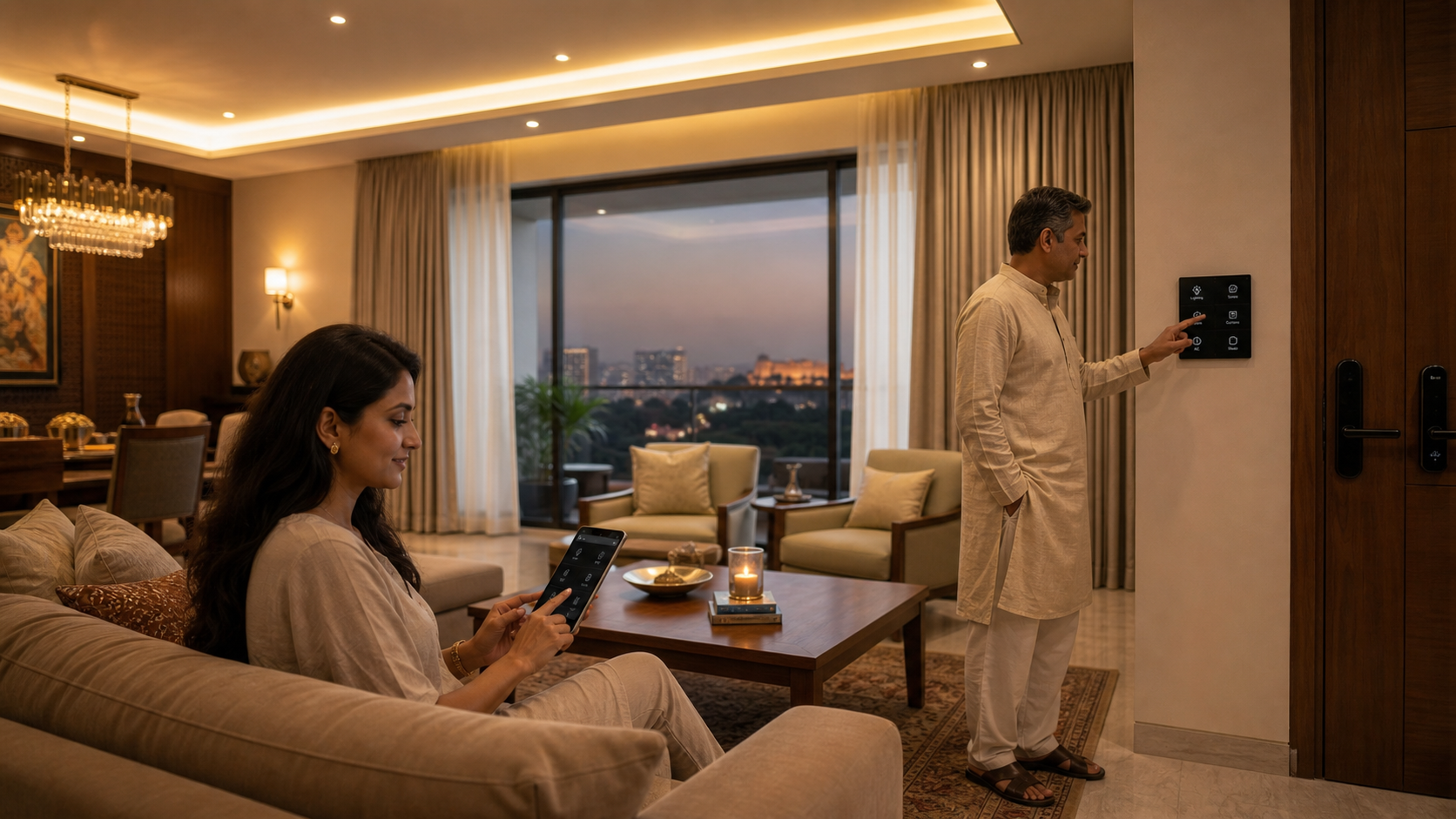
The right answer for most home automation projects is not app-only and not keypad-only. It is a clear control hierarchy. Wall keypads should handle the most frequent everyday actions. Apps should support flexibility, remote access, and secondary control.
If you want the broader system view first, start with the main home automation guide.
Why app-only control usually feels weaker in real life
App control sounds convenient in theory, but it often creates friction in daily family use. Pulling out a phone to trigger simple actions is slower and less intuitive than pressing a physical button where the action naturally happens.
- Apps add extra steps for common scenes
- Guests and family members may not use them consistently
- They depend more visibly on phone habits and connectivity
This is one reason scene-based automation outperforms app-only smart devices in real homes.
Why keypads matter so much
Wall keypads create instant control at the right physical moment. They work best for:
- Entrance scenes
- Living-room mood changes
- Bedside control
- All-off and night logic
Good keypad placement usually creates more daily value than adding another app feature. See How to Plan Keypads in a Home.
Where apps are still useful
Apps still matter. They are useful for:
- Remote access when away from home
- Secondary adjustments and monitoring
- Fine-tuning or checking room states
- Control when the homeowner wants flexibility beyond wall scenes
The mistake is making the app the primary control layer for actions that happen many times every day.
The best approach is usually both, with different roles
In most homes, the best control model is:
- Wall keypads for fast daily control
- Apps for remote, backup, and secondary adjustments
That gives the speed of physical control without losing the flexibility of digital access.
Which rooms benefit most from wall control?
Wall control matters most where scenes repeat frequently:
- Bedrooms
- Living rooms
- Dining areas
- Main entrance and exit points
Read Best Home Automation Ideas for Bedrooms, Living Rooms, and Dining Areas.
Reliability is also part of this decision
Homes that depend too heavily on app control usually feel less dependable when internet or phone behavior is inconsistent. Physical scene control remains one of the strongest reliability decisions a homeowner can make.
Read Do Smart Homes Work During Power Cuts and Internet Outages?.
Final thoughts
For most smart homes, the right answer is both, but not equally. The wall keypad should do the heavy daily work. The app should extend control, not replace the natural experience of using the home.
To explore keypad-first control, see Smart Keypads and Stella.