
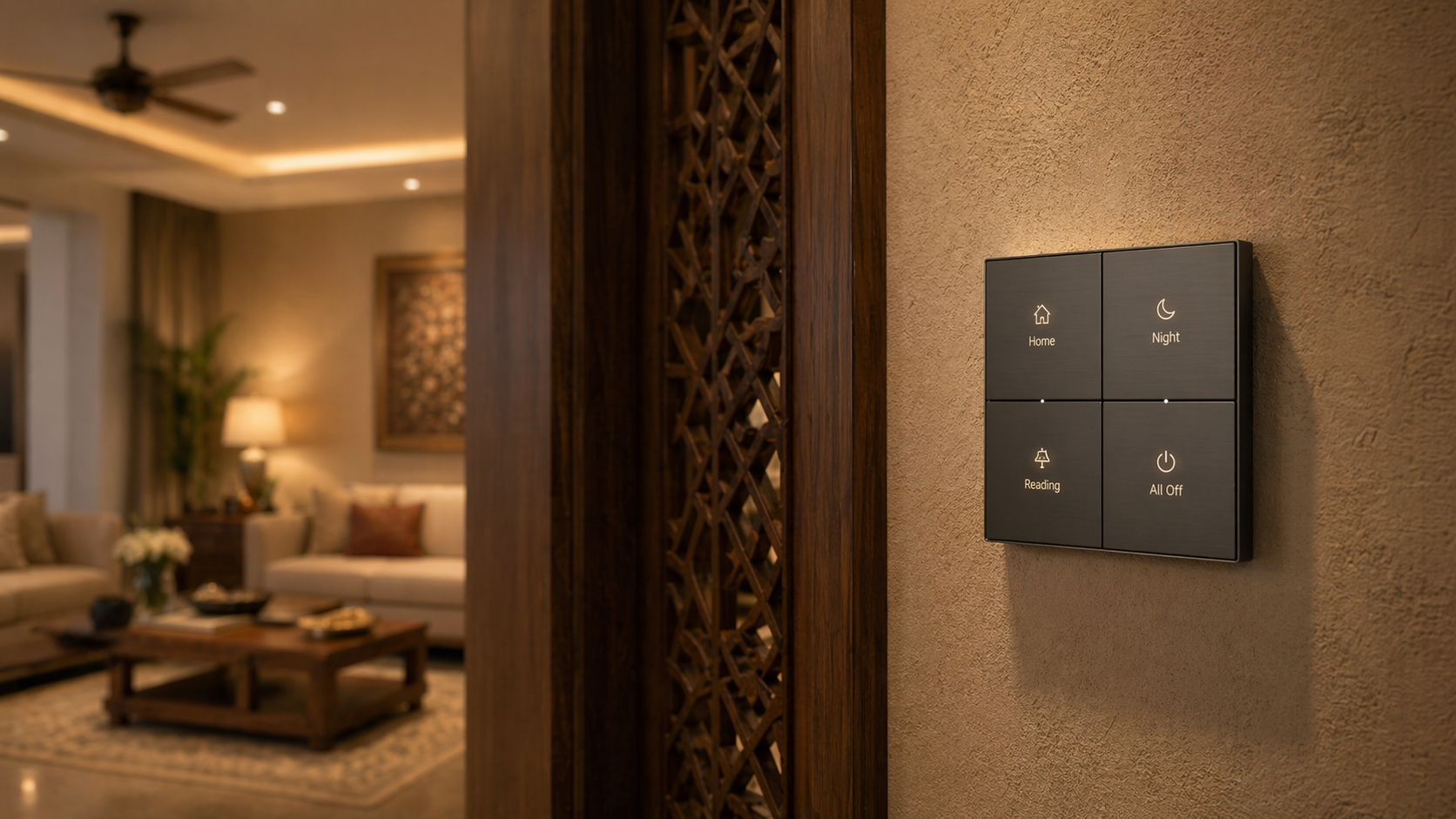
Home automation is not only about having devices. It is about how the family controls the home every day. That is why keypad planning should happen early, ideally before electrical points are fixed. Explore: Stella Keypad and Smart Keypads.
Why keypad planning matters
Most homeowners use physical control far more often than they expect. Guests, children, parents, and service staff also need controls that make sense without opening an app. Good keypad placement reduces friction and makes scenes immediate.
Entrance keypad
The entrance is one of the most important control points in the house. It usually handles welcome, evening, all-off, or away logic. This is where the home should respond quickly and clearly the moment someone enters or exits.
Bedside keypad
Bedrooms benefit enormously from bedside control. A bedside keypad can manage lighting scenes, night mode, curtain movement, and selected comfort settings without the need to get up or search for separate remotes.
Living room keypad
The living room often needs scene control more than any other space. Relax, movie, evening, and hosting scenes should be easy to trigger. This is also where lighting and curtains often need to work together cleanly.
Dining keypad
Dining areas benefit from simpler scene control, usually around dining mood, common-area lighting, and transitions into evening or all-off routines. A dining keypad should support the wider room logic, not feel isolated from the rest of the floor.
Other keypad locations to think about
- Family lounge or upstairs landing
- Passage points where several rooms connect
- Home theatre or media zone
- Master dressing or private suite areas
What should a keypad control?
A good keypad should not try to expose every device individually. It should focus on useful scenes and the few actions people use repeatedly. That usually means lighting scenes first, then curtains and comfort where relevant.
Planning mistakes to avoid
- Too many buttons with unclear logic
- Missing bedside control
- Switchboards placed where they are inconvenient in real life
- Scene names that do not match daily use
- Planning keypads after interiors are already fixed
Keypads should be part of a broader scene plan
Keypad planning only works well when it is tied to scene planning. If lighting, curtains, and comfort are already being designed room by room, keypad positions become much easier to get right. For broader context, read: What Should You Automate First in a Hyderabad Home?
Final thoughts
If you want home automation to feel elegant and intuitive, keypad planning should be treated as a core design decision, not an afterthought. The best keypads are not the ones with the most buttons. They are the ones placed in the right locations with the right scene logic.
For the larger framework, read the main home automation guide.
FAQ
Where should a smart home keypad be placed first?
The entrance is usually the first priority, followed by bedside control in bedrooms and scene control in the living room.
Do bedrooms really need keypads?
Yes. Bedside keypad control is one of the most useful parts of a smart home because it makes lighting, curtains, and night routines easier to manage.
Can keypads replace app control?
They should handle most daily control, while apps remain useful for remote access and occasional changes.