
In this guide
This article is part of our wider coverage of home automation in Hyderabad. Rules differ from one community to another, so treat this as a guide to the questions to ask, and always follow your own association’s written rules.
Why the society cares
To an association, your installation is a set of people, tools and materials moving through shared spaces, and work inside your walls that could affect a shared building. Their concerns are practical: security at the gate, noise for neighbours, debris in lifts and corridors, and anything that touches the structure, shared wiring, the main door line or the facade. Home automation in a flat that is already handed over usually touches only the flat’s own wiring and walls, which is why it is normally straightforward to approve.
What usually needs approval
| Work | Usually | Notes |
|---|---|---|
| Replacing switches with keypads in existing boxes | Simple notice | Electrical work inside your flat on your own circuits |
| Wall chasing for new wiring or deeper boxes | Interior work permission | Noisy; restricted hours; no chasing into structural members |
| False ceiling changes for lighting | Interior work permission | Often part of a wider interior job |
| Curtain tracks and pelmets | Interior work permission | Drilling into ceilings; check for concealed services |
| Changing the main door lock | Check rules | Some communities set a uniform corridor-side look |
| Anything on the facade or balcony exterior | Formal approval, often refused | External cameras or fittings can affect the elevation |
| Anything in corridors, shafts or common areas | Formal approval | Shared space; usually not needed for in-flat automation |
Most associations ask for a short application with your flat number, the scope of work, the contractor’s name and the dates. Some ask for a refundable deposit for interior work.
Work hours, noise, debris and lifts
- Work hours: many communities allow noisy work only on weekdays within set daytime hours, often with a lunch break and no drilling on Sundays and holidays. Quiet work such as programming may be allowed longer.
- Noise: wall chasing and ceiling drilling are the loud parts. Bunch them into the first days so the rest of the installation is quiet.
- Debris: dust and offcuts must leave in bags through the service lift, not the passenger lift, and corridors must be clean at the end of each day.
- Lifts: long curtain tracks may need the service lift or to be cut on site; ask about booking slots.
- Power: work should run from your own supply; using common-area sockets is usually not allowed.
Inside your flat vs common areas
Everything a typical home automation system needs — keypads, lighting control, curtains, sensors and the gateway — lives inside the flat. That keeps you within your own walls:
- The Zigbee network and the gateway sit inside your home on your own router. Nothing is installed in shafts or corridors.
- Your distribution board is yours, but do not alter the incoming supply or the meter side; that belongs to the electricity provider and the building.
- Neighbouring walls: a shared wall between flats needs care when chasing. Your installer should keep cuts shallow and away from the other side.
- Building intercoms and video door phones provided by the builder are usually part of a community system; integrating or replacing them needs the facility team’s agreement.
If your flat came with a builder package, our guide to builder smart home packages explains what is yours to change.
Smart locks, doors and the facade
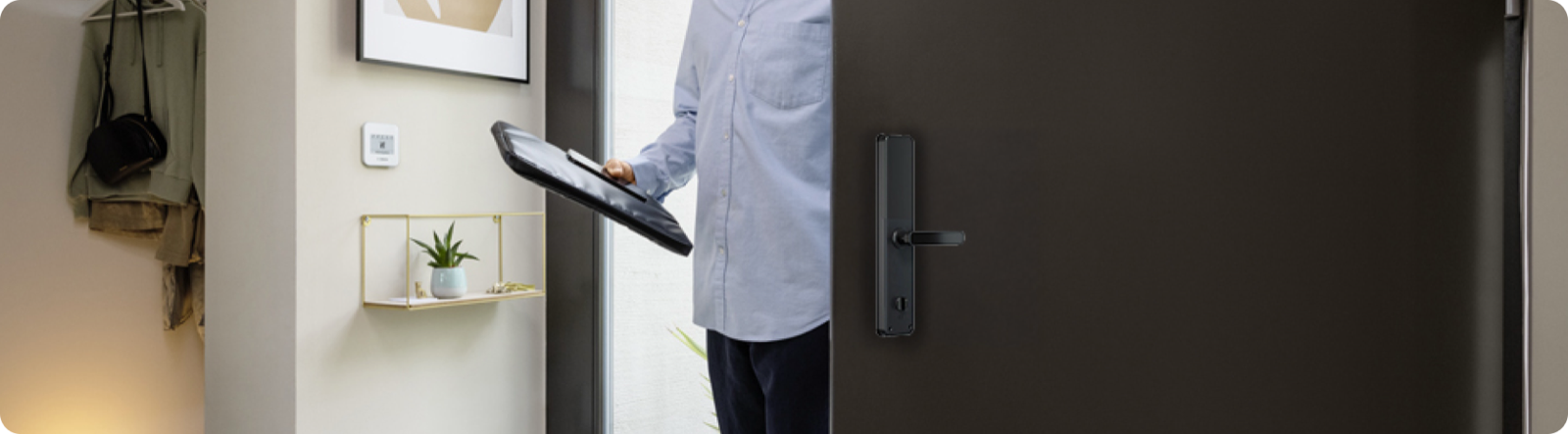
The main door is where in-flat work meets the common corridor. Some communities require every door to look the same from the corridor, or require fire-rated doors to stay unmodified. Before choosing a smart lock, ask the facility team whether the outside escutcheon can change and whether the door is fire-rated. Similarly, cameras should point inward or at your own doorway, not along the shared corridor, both for privacy and for the association’s comfort. Our guide to planning a smart main door lock covers the door-side details.
A step-by-step checklist
- Read the interior work rules from the association or facility office: hours, deposit, lift use, debris disposal.
- Get the scope from your installer in writing: which walls are chased, what is drilled, how many days are noisy.
- Submit the application with dates and the installer’s details; ask about entry passes for each person.
- Inform immediate neighbours, especially those sharing a wall, with the noisy dates.
- Plan the noisy work first and the quiet commissioning last.
- Protect floors, lifts and corridors during the work, and clean up daily.
- Close out: confirm with the facility team that the work is complete and claim back any deposit.
For how long each phase takes, see how long a home automation installation takes.
How Pert delivers it — a designed solution, not a DIY kit
Pert installs in gated communities across Hyderabad regularly, and we plan around society rules from the start. We give you a clear written scope for the association, schedule noisy work inside permitted hours, keep our team’s passes and paperwork in order, and leave corridors and lifts clean. Everything we fit — Stella keypads, tunable and dimmable lighting, motorised curtains and security devices — sits inside your flat on one Zigbee network through the Pert gateway. Our own team installs and commissions it. When you compare installers, our guide to the best home automation companies in Hyderabad lists what to ask.
Living in a gated community in Hyderabad? We design and install lighting, curtains, keypads, scenes and security, and help you with the paperwork your association needs. Request a consultation →
Frequently asked questions
Do I need society permission to install home automation in my apartment?
Usually you need at least a notice, and for wall chasing, ceiling drilling or curtain track work most associations treat it as interior work that needs permission. Replacing switches with keypads in existing boxes is minor. Check your own association’s written rules, because they differ between communities.
What are typical work timings for interior work in Hyderabad gated communities?
Many communities allow noisy work only on weekdays during set daytime hours, often with a break at lunch and no drilling on Sundays and holidays. Quiet work such as programming may be allowed for longer. Your facility office will give you the exact timings.
Can I install a smart lock on my apartment main door?
Usually yes, but ask the facility team first. Some communities require a uniform corridor-side look or have fire-rated doors that must not be altered. Choose a lock that fits the door preparation and keeps the outside appearance within the rules.
Does home automation need anything installed in common areas?
Normally no. Keypads, lighting control, curtains, sensors and the gateway all sit inside the flat, and the gateway works on your own router. Builder-provided intercoms and video door phones are usually part of a community system, so changing them needs the facility team’s agreement.