
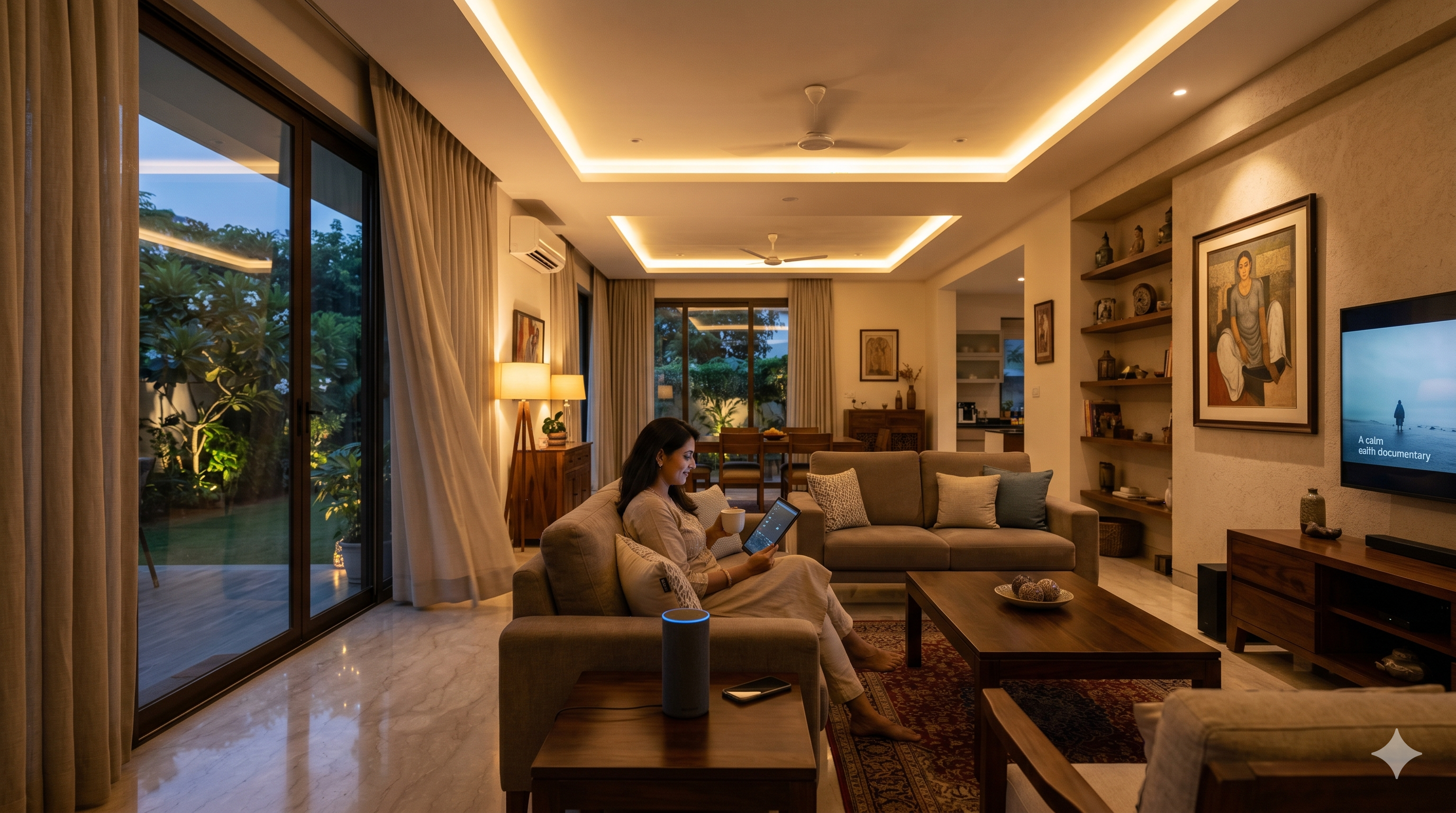
A reliable smart home is not created by adding more gadgets. It is created through good planning, practical system design, easy control, and strong after-sales support. In Indian homes, reliability also depends on how well the system handles real conditions like frequent power cuts, network issues, changing family routines, and long-term maintenance.
Reliability starts with good planning
The biggest difference between a reliable smart home and a frustrating one is planning. Many automation problems do not begin because the products are bad. They begin because the system was not planned around how the family actually lives, where controls should be placed, which scenes are genuinely useful, what should work together, and how the system will be maintained later.
That is why good planning is more important than a long feature list.
Many homes become unreliable because automation is planned too late
A lot of homeowners decide on automation only after construction has already moved ahead. That is one of the biggest reasons they later feel the system is difficult, incomplete, or expensive to execute properly. When decisions are delayed, the project often ends up needing rework. This is where reliability gets affected before the system is even installed.
Common late-planning problems include:
- No provision for motorized curtains near windows
- No provision for Wi-Fi access points in the right locations
- No provision for bathroom sensors for lights or exhaust
- No proper lighting planning for scenes, layered control, or ambience
- Keypad points being missed or placed poorly
- Power points not aligned with the automation plan
This usually leads to extra wiring changes, civil rework, higher cost, limited automation scope, awkward control positions, and a weaker final user experience. This is why automation should be thought about early, not after electrical and interior decisions are already fixed.
Not planning curtain motor points creates unnecessary rework
Motorized curtains are one of the most practical smart home features, but they need proper provision near the curtain track. If the home is not planned for this early, homeowners often face visible retrofit wiring, additional false ceiling work, changes near window pelmets, limited motor placement options, and delayed integration into scenes.
If curtains are likely to be automated later, it is far better to plan the provision during construction itself. Explore: Curtain Automation.
No Wi-Fi access point planning weakens the whole smart home experience
Even if the automation core is not dependent on internet for normal daily control, modern homes still need strong network planning for app access, remote control, voice assistants, device onboarding, camera systems, and future smart devices.
A lot of homes make the mistake of leaving networking as an afterthought. That often results in dead zones, unstable app experience, weak performance for connected devices, and additional ceiling or wall rework later. Good planning should include proper Wi-Fi access point locations during construction, especially in larger villas, duplex homes, and properties with multiple bedrooms.
Bathroom sensor planning is often missed
Bathrooms are one of the easiest places to improve comfort and convenience with automation, but they are frequently ignored during planning. If no provision is kept for bathroom sensors, homeowners miss out on automatic light switching, exhaust fan automation, more efficient usage, and a cleaner hands-free experience.
Later installation can become more difficult if sensor positions were not considered, wiring points were not planned, or ceiling access becomes limited after finishing. Small automation decisions like this are often what separate a well-planned smart home from one that feels incomplete.
Poor lighting planning makes automation feel weaker than it should
Lighting is one of the most important parts of home automation, but it only works well when the lighting design itself is planned properly. A lot of people want scenes later, but they never planned layered lighting, cove lighting, accent lighting, dimmable loads, or the right zoning for living, dining, bedrooms, and corridors.
Without proper lighting planning, even a good automation system cannot create the best effect. That often leads to flat lighting scenes, limited ambience, fewer useful moods, and disappointment with the final smart home experience. Explore: Smart Lighting.
Reliable automation does not need complex architecture
A common misconception is that a smart home becomes more premium when it becomes more complex. In fact, many homes become less reliable when the architecture is unnecessarily complicated. Systems that depend on too many layers, too much custom programming, or too many specialized components can become harder to maintain and harder to troubleshoot later.
For most Indian homes, a simpler and better-integrated automation approach is often more reliable than a system that looks sophisticated only on paper. The goal is not technical complexity. The goal is dependable comfort.
A reliable smart home should not depend on Wi-Fi or internet for normal use
Many homeowners in India worry that home automation will stop working if the Wi-Fi is weak or if the internet goes down. That concern is valid, but it usually comes from confusing smart automation with internet-dependent gadgets.
A well-designed automation setup should not depend on the internet for basic daily use. Scene control should still work from the wall keypad, lights should still respond normally, curtains should still operate, and comfort scenes should still function locally.
Internet and app access are useful for remote control, voice control, monitoring, and updates. But the core automation experience inside the house should remain practical even without internet. You can explore this control approach through: Stella Keypad and Smart Keypads.
Frequent power cuts are a real Indian condition
Any honest discussion about home automation reliability in India must consider power cuts. In many Indian homes, especially in some villa communities and developing residential zones, power interruptions are still a practical reality.
A reliable system should recover cleanly after power returns, restore expected device behavior, avoid confusing reset states, not require constant reprogramming after interruptions, and remain easy for the homeowner to use after restart.
Good after-sales service matters more than most buyers realize
A smart home is not only about installation. It is also about what happens after handover. Even a well-designed system may need scene adjustments, app support, user preference changes, service visits, future upgrades, or replacement of a part over time.
If after-sales service is weak, the homeowner starts feeling locked into a system they cannot comfortably maintain. That is why one of the biggest indicators of reliability is not only the product. It is the company behind the product.
Easy maintenance is a major part of reliability
Reliability does not mean nothing will ever need attention. It means the system remains practical and manageable over time. A good smart home should be simple to understand, easy to expand, easy to service, and easy to update when family routines change.
If a system needs a specialist for every minor change, it may not be the right fit for many Indian homes. That is what long-term reliability looks like.
Reliable automation is scene-based, not gadget-based
Many unreliable smart homes are built one device at a time. A bulb here, a plug there, a separate app for curtains, another app for AC, and something else for lighting scenes. That may look smart initially, but it often becomes fragmented.
A better approach is to think in scenes:
- Morning
- Evening
- Relax
- Dining
- Night
- All Off
- Away
Once a home is designed around scenes, the automation feels more dependable because the logic becomes clearer and more repeatable. Explore: Smart Lighting, Curtain Automation, and Security Solutions.
What makes home automation reliable in India?
- Good planning from the beginning
- Simple, practical architecture
- Control that does not depend on internet for basic use
- Strong scene-based design
- Clean recovery after power cuts
- Products suited to Indian homes
- Easy maintenance
- Dependable after-sales service
How to avoid unreliable automation
- Planning automation too late
- Choosing only on price
- Relying only on app control
- Using disconnected smart gadgets instead of an integrated system
- Overcomplicating the architecture
- Ignoring support and maintenance questions
- Not planning for Indian power and usage conditions
If you are still in the evaluation stage, these guides will help:
- How to Compare Home Automation Companies in Hyderabad on Service, Not Just Price
- When Should You Plan Home Automation During Construction?
- Wired vs Wireless Home Automation
Final thoughts
So, is home automation reliable in India? Yes, absolutely, when it is designed the right way. Reliability in Indian homes does not come from complexity. It comes from good planning, practical architecture, offline-friendly control, easy maintenance, and strong after-sales support.
If the system is built around how the home is actually used, and not just around a list of gadgets, home automation can be highly reliable, highly practical, and genuinely worth living with in Indian conditions.
FAQ
Is home automation reliable in India?
Yes. Home automation can be very reliable in India when it is properly planned, easy to maintain, and not dependent on internet for basic daily functions.
Does home automation stop working without Wi-Fi?
A well-designed system should not. Core features like keypad-based scene control, lights, and curtains should still work locally even if internet is unavailable.
Are power cuts a problem for smart homes in India?
Power cuts are a practical condition in many Indian homes, so the system should be designed to recover cleanly and remain easy to use after power returns.
Why do many smart homes feel unreliable later?
Often because automation was planned too late and important provisions for curtains, Wi-Fi access points, bathroom sensors, or proper lighting were missed during construction.
What matters most for reliability?
Good planning, simple architecture, scene-based control, practical maintenance, and strong after-sales support matter more than having the largest number of features.
Is after-sales support important in home automation?
Yes. Support quality plays a major role in long-term reliability because homeowners often need scene updates, service help, or future changes after installation.