
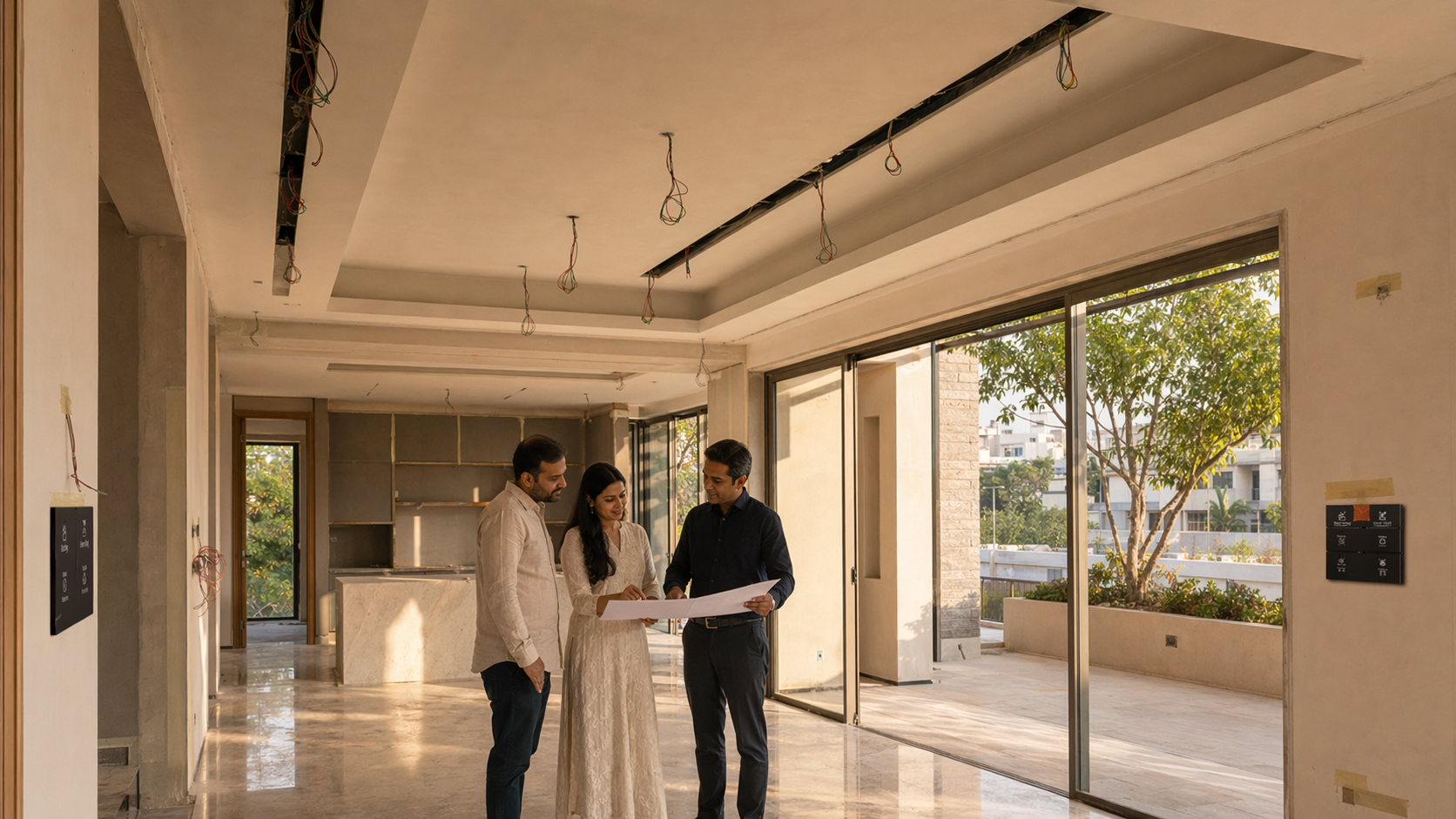
1. Planning automation too late
This is the most common issue. When automation is discussed after electrical or interior decisions are already fixed, the project loses flexibility and often needs avoidable rework.
2. Missing curtain motor provisions
Automated curtains need proper provision near the track. If this is missed, the project may need exposed wiring, changes to pelmets, or limited motor placement later. Explore: Curtain Automation
3. Weak lighting planning
A lot of homeowners want scenes later, but they never planned the lighting properly. Without strong zoning, layered lighting, and dimmable thinking, automation cannot create the full mood or usability it should. Explore: Smart Lighting
4. Poor keypad placement
When controls are placed without thinking about daily routines, even a good system becomes inconvenient. Entrance, bedside, living room, and dining control points should be planned early. Read: How to Plan Keypads in a Home
5. Not planning Wi-Fi access points
Even when the core automation is not internet dependent for normal use, modern homes still need strong network coverage for remote access, cameras, onboarding, and future devices. Weak network planning hurts the whole experience.
6. Ignoring bathroom sensors and small-use areas
Bathrooms, passages, and utility zones are often ignored during planning, but they are easy places to improve comfort and convenience if the provisions are thought through early.
7. Focusing only on apps
Homeowners sometimes assume app control is enough. In real life, a smart home works better when it is scene-led and supported by practical physical controls, not only by apps. Read: Why Scene-Based Automation Is Better Than App-Only Smart Devices
8. Choosing on price alone
Cheaper proposals can miss important planning depth, support quality, or control strategy. A lower quote is not automatically better if the system is harder to live with later.
9. Not thinking room by room
A smart home should be planned around how each room is used. Bedrooms, living rooms, dining spaces, and entrances all need different scene priorities.
10. Not asking how the home should actually feel
This is the deeper mistake. Good automation is not just technical control. It is about how the home behaves in the morning, evening, while hosting, while relaxing, and at night.
Final thoughts
The best way to avoid planning mistakes is to start early and think in scenes, control points, and daily routines instead of random devices. For a full overview, read the main home automation guide.
FAQ
What is the most common home automation planning mistake?
Planning too late is usually the biggest mistake because it creates limitations, rework, and missed opportunities.
Do lighting decisions affect automation quality?
Yes. Lighting planning is one of the biggest factors in how useful and premium a smart home feels.
Why do keypad locations matter so much?
Because they decide how intuitive the home feels in daily use. Good scenes need good control points.