
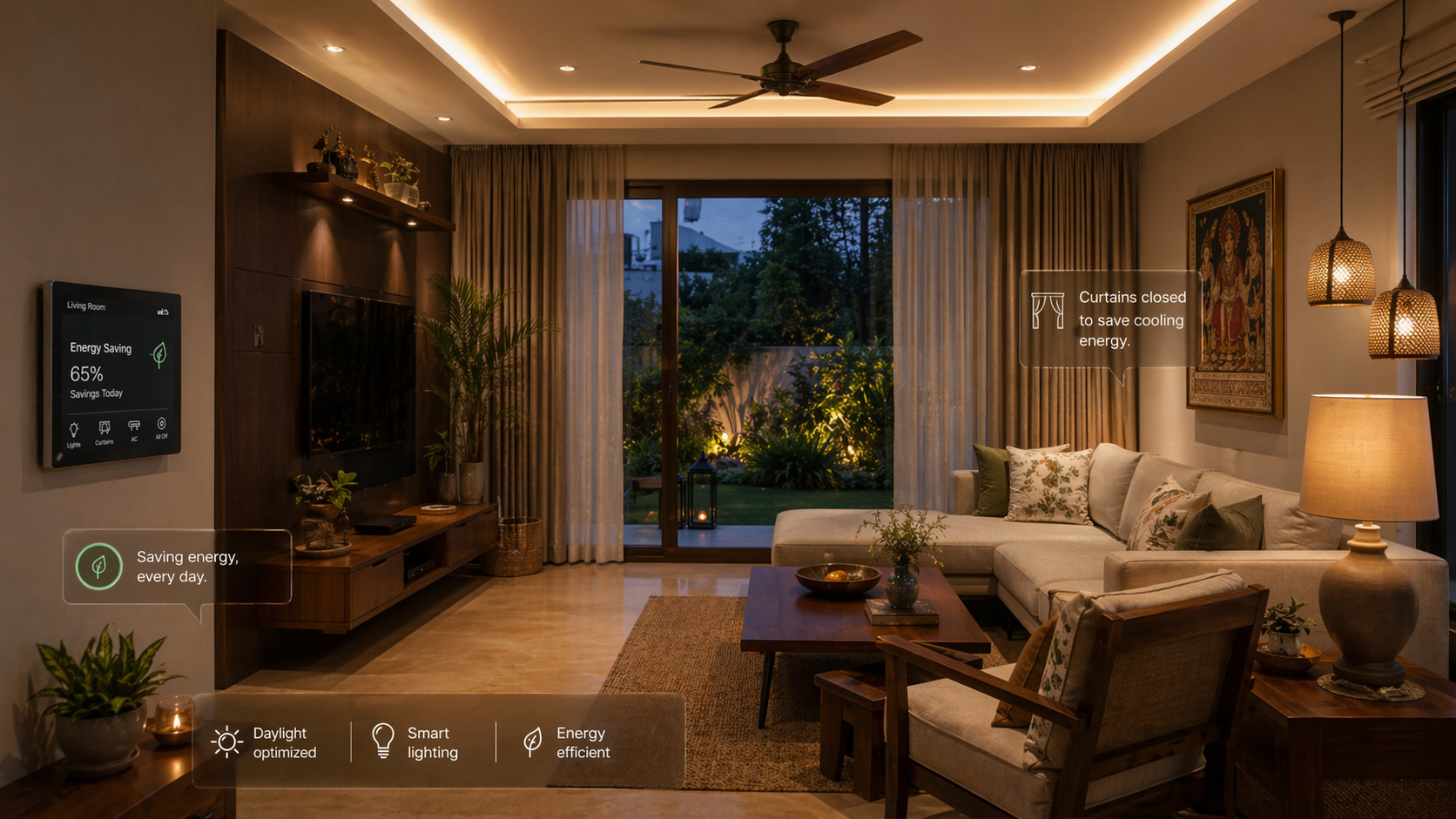
What actually saves electricity?
- Turning on only the lights you need
- Dimming instead of running everything at full output
- Schedules that avoid unnecessary usage
- Occupancy or presence logic in selected areas
- Curtain control that supports daylight use and heat management
- Better comfort routines instead of wasteful AC usage patterns
Lighting scenes can reduce waste
One of the easiest ways smart lighting reduces waste is by replacing the habit of switching everything on together. Scene-based control lets the home use only the circuits needed for a given moment, which is usually more efficient than blanket lighting.
Dimming matters
Dimming is not only about ambience. When used correctly, it can reduce unnecessary power use, especially in evening and relaxation scenes where full brightness is not needed.
Curtains affect cooling load too
Curtain automation can support energy use indirectly by helping manage heat gain, glare, and privacy more intelligently through the day. That can improve comfort and reduce the need to overcool a room in some situations.
Comfort control should be smarter, not just remote
Automation does not save energy if it only gives more ways to run equipment. It saves energy when comfort settings are tied to realistic routines, occupancy, and better scene behavior.
Where automation does not magically save power
Home automation does not automatically reduce electricity just because devices are connected to an app. If the home is poorly planned and everything is still running unnecessarily, the presence of automation alone will not help much.
Planning matters more than gadget count
Energy-saving value comes from planning. That includes lighting zoning, scene design, curtain logic, keypad strategy, and how the home is actually used every day. Read: Common Mistakes Homeowners Make While Planning Home Automation in Hyderabad
Final thoughts
Home automation can save electricity, but the savings come from good control logic, not just from adding smart devices. Better lighting scenes, dimming, curtain coordination, and realistic comfort routines are what actually reduce waste.
For the broader context, read the main home automation guide.
FAQ
Does home automation automatically lower electricity bills?
No. It lowers waste when the system is planned around better control, schedules, and scene logic.
Can smart curtains help save energy?
Yes, indirectly. They help manage daylight, glare, and heat gain, which can support better comfort efficiency.
What is the easiest energy-saving automation feature?
Lighting scenes and dimming are usually the easiest and most visible first step.