
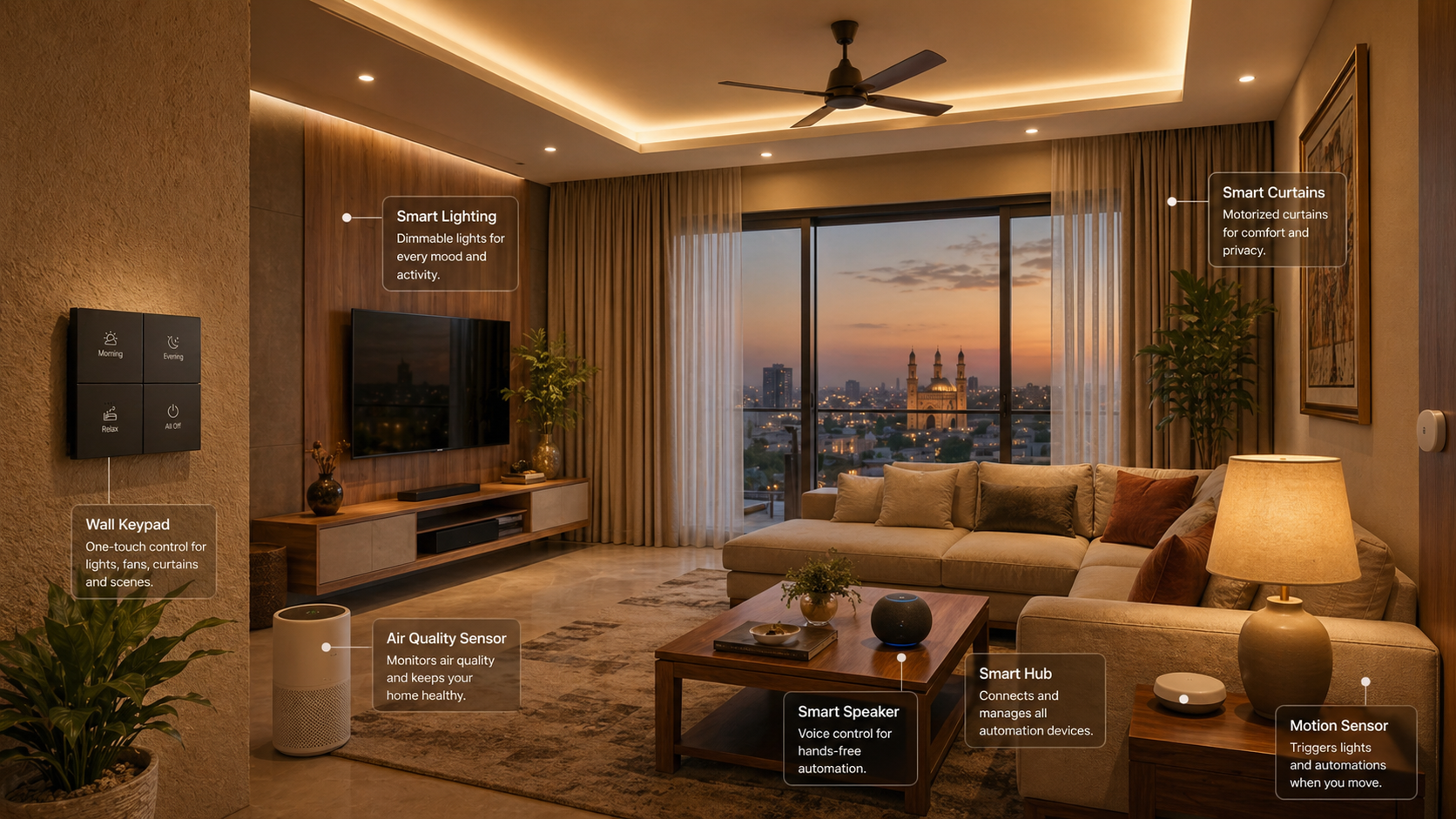
Start with controls, not gadgets
The first thing a smart home needs is a clear control strategy. That usually means well-planned keypads and strong scene logic, not dozens of disconnected devices.
Core devices most homes actually need
- Lighting control devices for scenes and zoning
- Keypads at entrance, bedside, and main living areas
- Curtain control where privacy and daylight matter
- Selected comfort or AC integration in important rooms
- Security devices where access or monitoring is relevant
Lighting devices
Lighting is usually the strongest first layer because it changes the feel of the home immediately. The key is not just smart bulbs. It is proper control over lighting circuits, scenes, and ambience.
Curtain devices
Curtain automation becomes valuable in living rooms, bedrooms, and large windows where privacy and daylight control matter daily.
Comfort and security devices
These are usually added based on project type. Some homes benefit heavily from AC integration, while others place more emphasis on access and security.
What is often optional?
Many homes do not need every possible smart device category from day one. It is usually better to get lighting, scenes, keypads, and a few high-value functions right first.
Final thoughts
The devices you actually need depend on how you want the home to behave, not on how many products can be sold into the project. Start with scenes, control points, and the rooms that matter most. For the bigger structure, read the main home automation guide.
FAQ
Do I need smart bulbs for home automation?
Not always. In many projects, circuit-level lighting control and scene design matter more than individual smart bulbs.
Are keypads really necessary?
Usually yes. Keypads make daily control easier and more intuitive than relying only on phones.
Can I start with only a few devices?
Yes. Many strong systems begin with lighting, scenes, keypads, and selected curtains or comfort integration.