
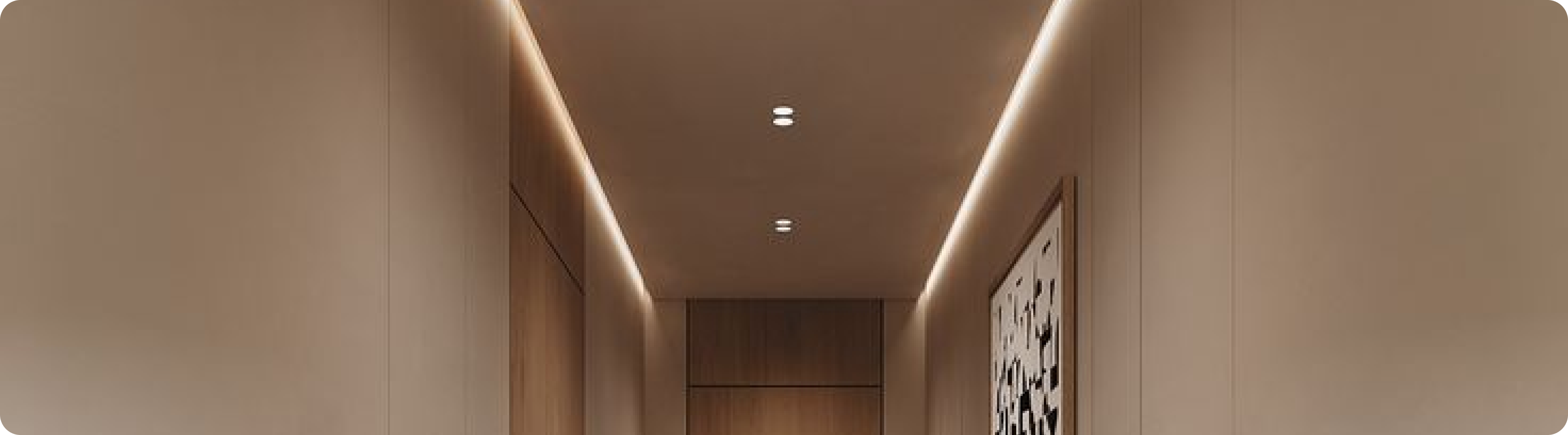
This guide is written for a layman planning home lighting for the first time. By the end of it, you should be able to look at each room and understand what kind of lighting layer it needs, what each fixture actually does, and how to combine them into a home that feels bright when required and calm when needed.
Before you compare light types, understand the three jobs lighting does
Every light in a home usually does one of three jobs:
- General lighting: the light that helps you see the room clearly.
- Task lighting: the light that helps you do something specific, like cooking, reading, dressing, or working.
- Mood lighting: the light that makes the room feel warm, soft, premium, or dramatic.
Most bad lighting plans happen when one fixture is expected to do all three jobs. A well-designed home usually combines different fixtures for different purposes.
What is a panel light?
A panel light is a flat light fixture that gives wide, even illumination. It is typically used where you want the room to feel uniformly bright without seeing harsh beams or dramatic shadows.
Where panel lights work best
- kitchens
- utility rooms
- bathrooms
- study areas
- spaces where functional brightness matters more than ambience
What panel lights are good at
They spread light evenly and make a room feel practically lit. If you want clarity and clean brightness, panel lights are useful.
What panel lights are not good at
They usually do not create a premium mood on their own. If a living room uses only panel lights, it can feel flat and office-like.
What is a COB light?
COB stands for Chip on Board. In simple terms, a COB light is a focused and more refined downlight that gives stronger, cleaner illumination than a basic diffuse ceiling light. It is often used in homes where the lighting needs to feel more architectural and premium.
Where COB lights work best
- living rooms
- bedrooms
- dining areas
- passageways
- premium commercial and residential interiors
What COB lights are good at
They create sharper, cleaner pools of light. They work well when you want the ceiling to look neat but still want the room to feel premium.
What COB lights are not good at
If overused without softer layers, they can make the room feel too spotty or overly bright in patches. COB lights are best when balanced with cove or indirect lighting.
If you want to explore this category further, start with Pert smart COB lighting.
What is a strip light?
A strip light is a flexible light tape, usually installed inside profiles, under counters, behind mirrors, under beds, inside shelves, or in false ceiling details. Strip lights are often used to create mood, highlighting, or soft continuous glow.
Where strip lights work best
- under kitchen cabinets
- inside wardrobes
- behind mirrors
- TV units
- headboards
- false ceiling details
What strip lights are good at
They add softness, highlight materials, and create a modern layered look. They are excellent for ambience.
What strip lights are not good at
They usually should not be treated as the main source of room lighting. Strip lights are supporting lights, not the full solution.
What is a spot light?
A spot light is a directional light used to highlight a specific object or area. It throws a focused beam rather than filling the whole room evenly.
Where spot lights work best
- paintings and artwork
- textured walls
- decor niches
- feature furniture pieces
- statement corners
What spot lights are good at
They create drama and visual focus. If you want attention to go to a wall texture, artwork, or display shelf, spot lights help.
What spot lights are not good at
They are not a replacement for general room lighting. If you try to light a whole room with spot lights, it will feel uncomfortable and uneven.
What is cove light?
Cove light usually means a hidden light installed inside a ceiling recess, ledge, or architectural pocket so the source is not directly visible. What you see is a soft glow washing the ceiling or wall.
Where cove lights work best
- living rooms
- bedrooms
- dining rooms
- premium lounges
What cove lights are good at
They make a room feel calm, warm, and expensive. Cove lighting is one of the easiest ways to reduce visual harshness and create evening mood.
What cove lights are not good at
If used alone, they may not give enough brightness for tasks like reading, dressing, or cleaning. They usually need support from COBs, panels, or task lights.
What is a linear light?
A linear light is a long, continuous light fixture. It can be surface-mounted, suspended, recessed, or built into profiles. Linear lights are usually chosen when the design language needs to feel cleaner and more minimal.
Where linear lights work best
- kitchens
- dining areas
- study spaces
- corridors
- modern minimalist interiors
What linear lights are good at
They create a crisp, modern architectural look. They are especially useful where you want long lines of light instead of multiple individual fixtures.
What linear lights are not good at
If they are selected only for appearance without checking brightness, glare, and placement, they can become uncomfortable. They need clean planning.
What is indirect light?
Indirect light means the light source is hidden and the illumination reaches the room by bouncing off another surface such as the ceiling, wall, headboard panel, or shelf. Cove light is one kind of indirect light, but indirect lighting can happen in other details too.
Why indirect lighting matters
Indirect light reduces glare. It makes rooms feel softer, more relaxed, and more luxurious. In bedrooms and living rooms, indirect lighting is often the layer that makes the difference between a technically lit room and a beautifully lit room.
So what is the actual difference in simple words?
- Panel light: broad and even practical brightness.
- COB light: focused premium downlight for cleaner ceiling lighting.
- Strip light: flexible glow light for edges, shelves, details, and mood.
- Spot light: highlight light for art, textures, and focal points.
- Cove light: hidden ceiling glow for soft ambience.
- Linear light: long continuous light for a cleaner modern look.
- Indirect light: hidden reflected light that makes the room feel softer.
How a layman should plan lighting room by room
Living room
Use layers. A good living room usually has COB lights for general coverage, cove or indirect lighting for mood, and spot or strip lighting for accents. Avoid relying only on panel lights here.
Bedroom
Bedrooms should feel softer than living rooms. Indirect light, cove light, and warm COB lights usually work better than harsh bright fixtures. Add strip lighting at the headboard or under furniture only if it supports the design.
Kitchen
Kitchens need functional brightness. Panel lights or clean linear lights work well for general illumination. Under-cabinet strip lights are useful for task lighting.
Bathroom
Bathrooms need clear practical light. Panel lights are often useful, with additional mirror lighting if required. Mood lighting is secondary here.
Dining area
Dining spaces usually look best with a combination of softer ambient light and a focal light over the table. Too much flat brightness can make the space feel plain.
Passageways and foyers
COB lights and linear lights usually work well in passages. Spot lights can also highlight wall textures or art in these transitional spaces.
Common mistakes homeowners make while designing lighting
- using only one type of light in the entire house
- making living rooms too bright and flat with panel lights only
- using too many spot lights and creating glare
- adding strip lights everywhere without purpose
- ignoring warm evening mood lighting in bedrooms and lounges
- choosing decorative fixtures before planning actual light layers
A simple formula that usually works
If you are overwhelmed, use this simple rule:
- one layer for clear brightness
- one layer for mood
- one layer for highlighting important details
That usually means:
- COB or panel for general light
- cove or indirect for softness
- strip or spot for accents
Why automation makes lighting design much more useful
Good lighting is not only about fixture choice. It is also about control. A layered lighting plan becomes much more valuable when the home can switch between bright work mode, evening mode, relaxation mode, and night mode without manually operating every circuit one by one.
That is where products like the Stella keypad and the broader Pert keypad range become useful. They help turn a technical lighting plan into practical scenes that people actually use every day.
If you are planning lighting for your home, where should you start?
Start with room function first, then choose the fixture type. Do not begin with a catalogue full of random lights. Ask:
- Does this room need brightness, mood, or both?
- Will I read, cook, relax, entertain, or work here?
- Should this ceiling look minimal, decorative, or layered?
- Do I want evening scenes and dimmable comfort?
Then review the relevant lighting products in the Pert catalogue or speak with the team through the contact page to build a cleaner room-by-room lighting plan.
FAQ
Which light is best for a living room?
A living room usually needs layered lighting. COB lights for general illumination, cove or indirect light for mood, and spot or strip lights for highlights work better than a single fixture type.
Which light is best for a bedroom?
Bedrooms usually feel best with softer lighting such as warm COB lights, cove lights, and indirect lighting. The goal is comfort, not harsh brightness.
Are panel lights better than COB lights?
Not better, just different. Panel lights are more even and practical. COB lights feel more refined and architectural. The better choice depends on the room.
What is the difference between cove light and indirect light?
Cove light is a specific type of hidden ceiling lighting. Indirect light is a broader idea where the light source is hidden and the light reflects off another surface.
Can I use strip lights as the main light in a room?
Usually no. Strip lights are better as supporting mood or accent lighting, not the main source of illumination for most rooms.
What should I choose if I want a premium look?
Layered lighting usually gives the most premium result. Combine COB lights, cove or indirect lighting, and selective accents instead of relying on one bright fixture type everywhere.