
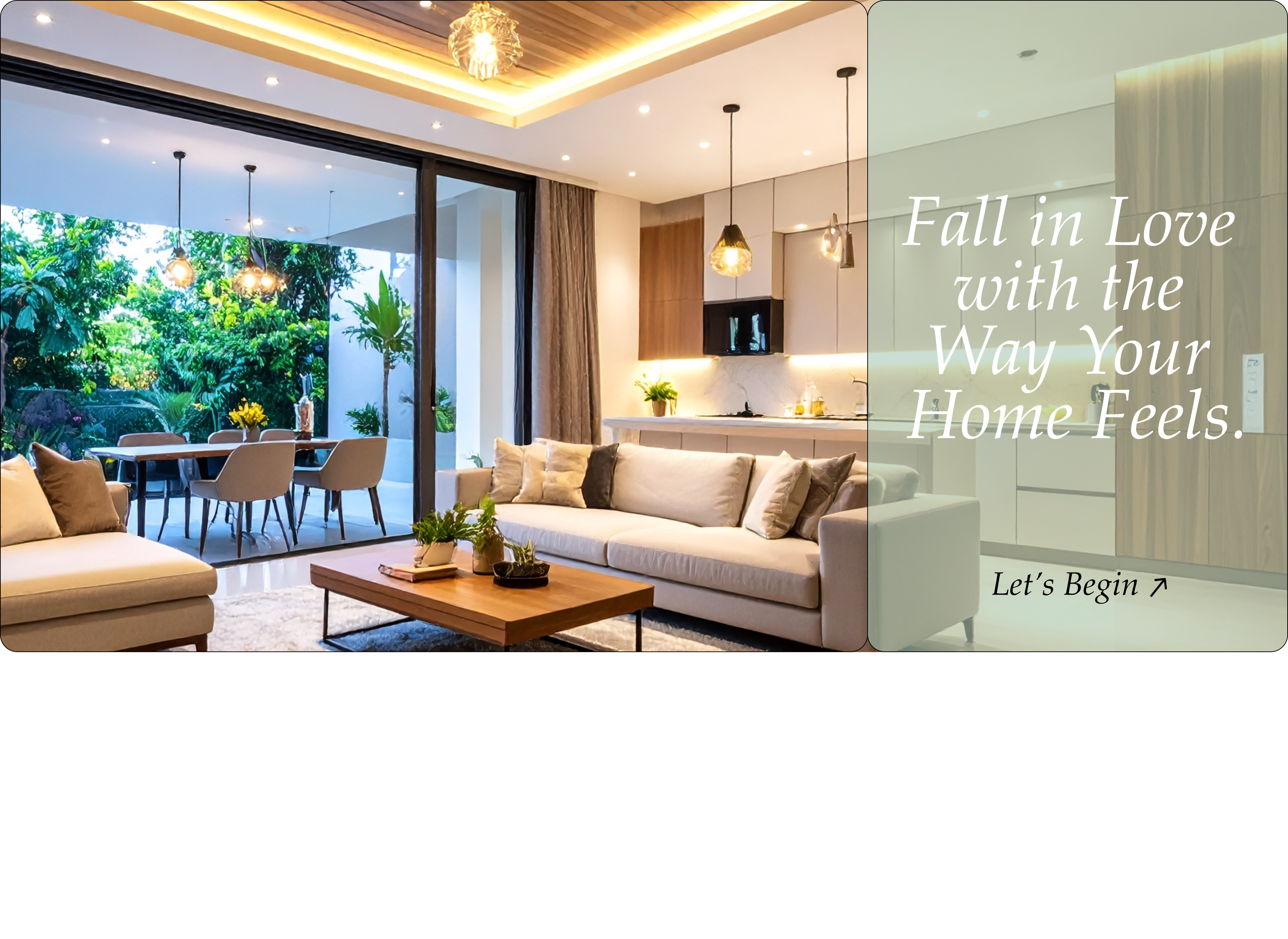
Good automation should not fight the design. It should strengthen it. The best projects are the ones where lighting, curtains, climate, and control points feel like a natural extension of the interior rather than an engineering layer added too late.
Integrated automation starts with design intent
For designers, every visible element matters. Switch plates, wall finishes, curtain lines, ceiling details, and lighting composition all contribute to the final experience of the room. Automation becomes useful when it respects those decisions and works quietly in the background.
That is why integrated automation should begin with design intent. Before discussing devices, it is more useful to ask: how should the room behave in the morning, in the evening, during entertaining, or when the family is winding down? Those answers define scenes, controls, and automation logic far better than a device-first approach ever can.
Invisible or low-visual technology usually works best
Design-led homes rarely benefit from wall clutter or visibly technical control systems. The strongest automation setups are the ones that reduce noise on the wall and preserve material continuity. A clean keypad, hidden drivers, discreet gateways, and well-integrated curtain motors support the interior instead of competing with it.
In practical terms, this means choosing products that sit naturally within the design language of the space. A refined keypad such as the Stella keypad gives the designer scene-based wall control without making the room feel over-instrumented.
Lighting is still the most important design layer
No automation conversation is complete without lighting. Lighting shapes mood, depth, comfort, and how expensive a room feels. When integrated properly, automation allows a designer to move beyond static lighting plans and create responsive spaces that shift through the day.
With smart lighting, one room can support multiple atmospheres: bright and clear in the morning, soft and warm in the evening, layered and intimate during entertaining, and calm and low-glare at night. That is not only a technical upgrade. It is a design advantage.
Curtains are not just motors, they are part of the visual rhythm
In new-age homes, curtains affect privacy, softness, daylight, and the emotional character of a room. When they are automated, they become part of the overall scene composition rather than a separate manual task. A morning scene with gentle light and opening sheers feels very different from an evening scene where curtains close and warm lighting takes over.
That is why curtain automation should be discussed early with designers. It influences joinery, pelmet details, fabric behavior, and how natural and artificial light work together throughout the day.
Scene design matters more than device count
Clients do not usually care about how many modules or controllers are hidden inside the walls. They care about how the home feels. A strong automation design is built around scenes that make sense to the family:
- Morning Scene
- Evening Scene
- Relax Scene
- Dining Scene
- Movie Scene
- Night Scene
For designers, scenes are important because they translate a visual concept into a living experience. They allow the home to transition gracefully instead of relying on individual switches and repeated manual actions.
Control should feel natural, not technical
One of the most common mistakes in automation planning is assuming the app is the primary interface. In reality, wall controls still matter most in daily life. Clients want scenes that can be triggered instantly and reliably from where they naturally stand, enter, or unwind.
This is where the broader smart keypad range becomes important. A well-placed keypad at the entrance, bedside, or living area gives immediate access to scenes without forcing the user into a phone-led experience.
Wireless planning can be especially helpful in design-led projects
In many apartment and renovation projects, design timelines and finished surfaces make heavy rewiring impractical. Wireless automation can be a more design-friendly route because it reduces disruption while still allowing scene control, lighting integration, and curtain logic to be built properly.
That matters for designers because fewer invasive changes often means better preservation of finishes, cleaner execution, and more flexibility when projects evolve midstream.
Automation should adapt to the client, not the other way around
The most successful projects are the ones where the technology disappears into the client’s routine. If the family has to change how they live in order to suit the automation, the design has failed. Integrated automation should respond to the home, the people, and the design language, not impose a new layer of friction.
That is why good planning includes the designer, the homeowner, the electrician, and the automation team early. When those decisions are aligned, the result is not just a smart home. It is a better home.
What designers should evaluate before selecting an automation partner
- How cleanly the control hardware fits into the design language
- Whether scenes are planned around lifestyle rather than gadgets
- How lighting, curtains, and climate work together
- Whether the solution can be executed without damaging finished surfaces
- How much support is available during commissioning and after handover
Those factors reveal more than a product brochure ever will.
Explore the products behind an integrated approach
If you are building design-led automation into a project, start with Pert’s Stella keypad, the broader keypad range, smart lighting, and curtain automation solutions. For a wider view of the product ecosystem, review the Pert catalogue or speak with the team about project planning.
FAQ
Why does integrated automation matter for interior designers?
Because clients now expect homes that are beautiful and intuitive. Automation affects wall design, lighting behavior, curtain planning, and how the space is experienced daily.
What is the biggest design risk with automation?
The biggest risk is visible clutter or poorly placed control hardware that breaks the visual harmony of the space.
What should be integrated first?
Lighting, curtains, and scene control are usually the most important layers because they most strongly affect ambience and daily experience.
Do designers need to think about automation early?
Yes. The best results happen when automation is discussed during design planning, not after ceilings, joinery, and control points are already fixed.